


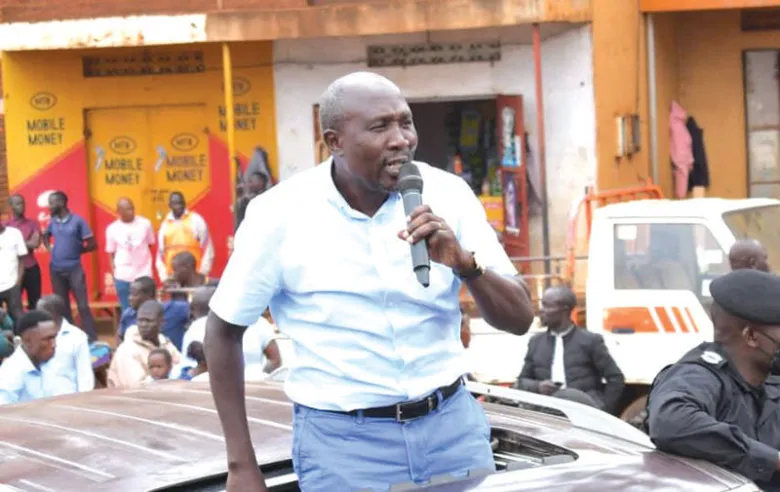
Parliamentary campaigns opened last week across Uganda, and with them came a quiet surprise.
Parties that were expected to stagger into the 2026 race— some newly formed, others fractured by internal battles—have instead put forward hundreds of parliamentary contenders.
The sheer speed and scale of that mobilisation has left many wondering: where did all these candidates come from, and who is paying for them? For months, analysts predicted that the Forum for Democratic Change (FDC), still reeling from a split that produced the People’s Front for Freedom (PFF), would struggle to stay competitive.
But on Tuesday, FDC spokesperson John Kikonyogo stepped before cameras with a different story.
“We have fronted more than 220 MP candidates across the country,” he said, sounding more defiant than triumphant. He insisted the party’s strength lay not in numbers alone, but in preparation— especially financial planning.
Kikonyogo revealed that the FDC covered nomination fees for all its parliamentary aspirants. Each candidate pays Shs 3 million to be nominated, meaning the party spent more than Shs 660 million.
“We have been getting money from IPOD,” he said, referring to the Inter-Party Organization for Dialogue.
“We chose to spend on our candidates’ nominations, and we are still supporting others in this campaign process. Every political party has its own priorities. For us in FDC, we prioritised our people.”
The disclosure surprised many inside and outside the party. Until recently, FDC was thought to be struggling financially and politically. Yet it has now outpaced its own internal conflicts to field one of the highest numbers of candidates in this election cycle.
The new breakaway formations have also shown unexpected muscle. The Democratic Front (DF), born out of a bruising fallout in the National Unity Platform (NUP) and led by former Leader of Opposition Mathias Mpuuga, has fielded over 90 parliamentary candidates.
The People’s Front for Freedom, headed by Kampala Lord Mayor Erias Lukwago, has secured 81 candidates—a striking figure for a party a few months old. Powering these candidacies, however, has required money—lots of it. DF’s 90 candidates alone translate into at least Shs 270 million in nomination fees.
PFF’s total remains unclear; Secretary General Harold Kaija confirmed the party sponsored candidates who couldn’t afford nomination fees, but declined to give details. The movement of candidates between opposition camps tells a deeper story of political scrambling and shifting loyalties ahead of 2026.
In Makindye West, DF candidate David Musiri described the confusion and betrayal that shaped his path to the ballot. He had lost the NUP flag—despite what he says was a 2021 agreement that incumbent MP Allan Ssewanyana would serve only one more term. Musiri then sought refuge in PFF, which had offered to sponsor his nomination. But when Lukwago endorsed Ssewanyana, Musiri bolted.
“I was shocked,” he said. “I quickly joined DF and I am now their candidate. First, I was betrayed by NUP… then PFF. I had no option but to move.”
Stories like his reflect a volatile opposition landscape—fractured, fluid and fiercely competitive. All this raises fresh questions for the National Unity Platform, which just three years ago rode a wave of national enthusiasm and received significant IPOD funding.
NUP, however, has announced it will not sponsor nomination fees for any of its parliamentary candidates, despite previously receiving more than Shs 1.4 billion every funding cycle before the rules changed.
The party has not revealed how many parliamentary candidates it will field—nor how they are financing themselves.
When reached for comment, Lovan Lwanyaga, secretary of the Elections Management Committee, said only: “Still compiling. The Electoral Commission is finalizing hearings of internal petitions.”
Meanwhile, civil society organisations and political observers are asking whether the sudden surge of candidates from new and splintered parties reflects grassroots enthusiasm—or a political economy fueled by opaque financing.
With just six months to the general elections, Uganda’s political field is more crowded than many expected. But behind the numbers lies a deeper contest over legitimacy, trust, and the power of money in shaping electoral choices.
For now, the opposition parties have done what few thought possible: mobilised, funded, and deployed hundreds of parliamentary hopefuls. Whether that momentum translates into victory—or unravels under the weight of internal tensions—will become clearer as January 12th draws closer.
Email:homelandnewspaper@gmail.com


