


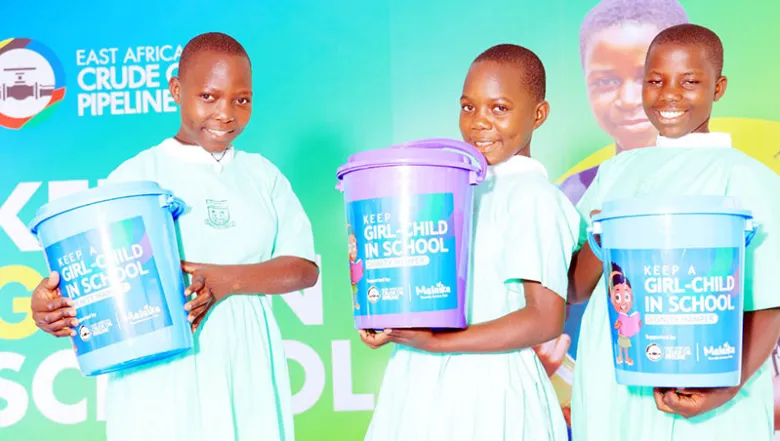
Managing menstruation isn’t just a monthly challenge, it’s a daily struggle that threatens the futures of countless girls in impoverished communities.
With limited access to affordable sanitary products, clean water and private sanitation facilities, many girls are forced to stay home from school, putting their education and health at risk. The persistent stigma and silence surrounding menstruation further deepen the crisis, turning a natural biological process into a source of shame and missed opportunities.
But amidst this challenge, one unlikely hero is rising: Anold Ssembusi, a 13-year-old primary six pupil at St Apollo Kanoni primary school in Kanoni parish, Kamuli village in Rakai district, is becoming a powerful advocate for menstrual hygiene. Ssembusi became aware of menstrual health issues during a hygiene lesson in his science class last year.
Since then, he has shown compassion and leadership in supporting his female classmates during their periods—ushering them to the senior female teacher for help, offering cloth or his sweater when needed, and urging his peers to show empathy and respect.
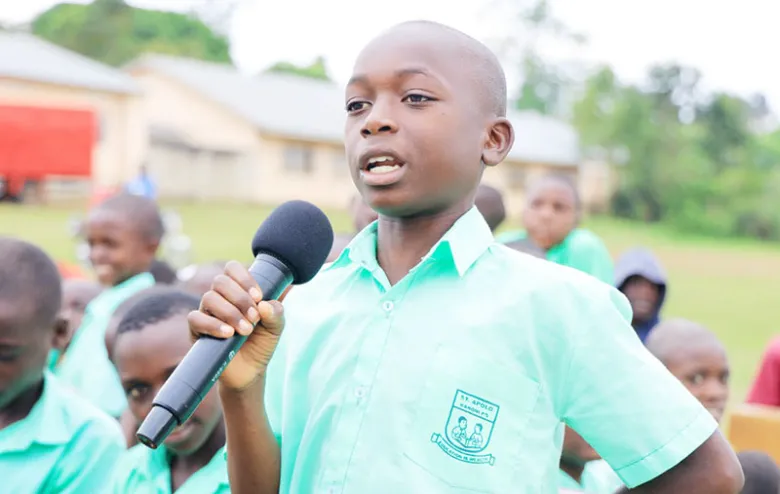
“Whenever I find a classmate experiencing her period, I give her a piece of cloth or even my sweater if nothing else is available, before she goes to the office for help,” says Ssembusi. “I encourage other boys to do the same so our sisters feel safe and supported.”
His passion is also personal—he is preparing to support his three younger sisters, who are nearing puberty, with the knowledge and empathy they will need. Ssembusi dreams of becoming a doctor one day and believes menstrual health is a national issue.
He urges the government to distribute free sanitary pads in schools, noting that many girls can’t afford them. At a community event in Kamuli village earlier this year, Ssembusi was disheartened to see men mocking a girl who had started her period, rather than helping her.
That moment strengthened his resolve to advocate for better awareness among boys and men. His efforts align with larger initiatives underway in the region and have been incorporated into the partnership between the East African Crude Oil Pipeline (EACOP) Ltd and Malaika Reusable sanitary pads.
Recently during the launch of the ‘Keep a Girl in School’ Dignity campaign, reusable sanitary pads were offered to 20 schools across five districts including Rakai, Gomba, Lwengo, Sembabule and Kyotera.
“When girls have access to proper sanitary products, they can stay in school, participate fully, and pursue their dreams,” says Matred Murungi, the social and environmental investment manager at EACOP.
“Menstrual health is key to girls’ success in school. By addressing this, we are helping break the cycle of inequality.”
Eddie Mwanje, the Rakai deputy resident district commissioner (RDC), notes that many of his sisters couldn’t complete school due to lack of sanitary towels.
“Thank you for coming to our rescue. Gone are the days when our sisters used banana fibers and leaves during their periods,” he says.
He recalls a painful memory of one sister being publicly shamed by a teacher for staining her uniform, highlighting the urgent need for compassionate awareness. Amos James Kasumba, headteacher of Kanoni primary school, emphasizes that menstrual health is a major reason for school dropouts among girls.
“We provide sports and career support for boys, but girls face a unique challenge—periods. Donors and partners like Malaika have stepped in, helping us keep girls in school. Access to sanitary products boosts confidence, attendance and academic performance,” he says.
However, Kasumba notes that school still lacks basic resources like desks and textbooks. Dorothy Awori, founder of Malaika Reusable Sanitary Pads, calls for menstrual health education to be integrated into the school curriculum.
“Some girls resort to using soil or even engage in sex to buy pads,” she says. “We must create safe spaces in schools where girls can learn about puberty, hygiene, and relationships without fear.”
Email:homelandnewspaper@gmail.com


