


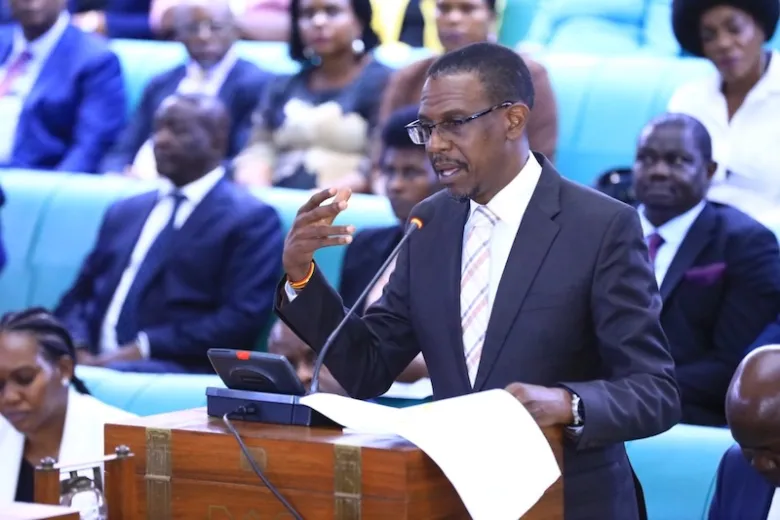
The government has directed prosecuting agencies to immediately halt arrests and prosecutions under several provisions of the Computer Misuse Act that were declared null and void by the Constitutional court.
In a March 19 letter addressed to the director of public prosecutions (DPP), Criminal Investigations Directorate (CID), the Inspector General of Police (IGP) and the clerk to parliament, Attorney General Kiryowa Kiwanuka said Sections 11, 23, 26, 27, 28 and 29 of the Computer Misuse Act (2023 Edition), together with Section 162 of the Penal Code Act, are no longer enforceable.
He instructed that no new arrests should be made under the affected provisions and that all ongoing criminal proceedings arising from them be terminated.
“The implication of the permanent injunction issued by the Constitutional Court against all government agencies, authorities and officials from enforcing the provisions of sections 11, 23, 26, 27, 28 and 29 of the Computer Misuse Act, 2023 Edition, and section 162 of the Penal Code Act, is that all criminal proceedings emanating from the said impugned provisions should be terminated,” Kiwanuka wrote.
However, Kiwanuka clarified that individuals already serving sentences under the annulled provisions will continue to serve them, noting that the ruling does not affect existing convictions.
The Constitutional court delivered its ruling on March 17, 2026, in consolidated petitions filed by Alternative Digitalk Limited, the Human Rights Network for Journalists-Uganda and the Uganda Law Society.
The court held that parliament passed the Computer Misuse (Amendment) Act, 2022, without complying with Rule 24(3) of its Rules of Procedure, which requires verification of quorum before voting on legislation.
The judges found the process inconsistent with Articles 88 and 89 of the Constitution. As a result, the challenged provisions were declared null and void, and a permanent injunction issued restraining all government agencies, authorities and officials from enforcing them.
The injunction also covers Section 162 of the Penal Code Act relating to libel. Kiwanuka also noted that government is required to pay 30 per cent of the petitioners’ legal costs and confirmed that his office has communicated the ruling to relevant agencies for compliance.
In the same judgment, the court examined Section 162 of the Penal Code Act and found that the definition of libel under Section 163 is vague and ambiguous, and does not meet the required standard of precision in criminal law.
The judges also ruled that parliament passed the Computer Misuse (Amendment) Bill on September 8, 2022, without the required quorum, rendering the process unconstitutional.
Email:homelandnewspaper@gmail.com


