


The illegal alcohol trade is once again tightening its grip on remote rural communities in Uganda’s Karamoja sub-region, with illicit gin commonly known as waragi increasingly finding its way into cattle kraals and isolated grazing areas despite ongoing security crackdowns.
Across Moroto District, particularly within the Kobebe grazing grounds in Lotisan Sub-county, herdsmen report that waragi trafficked from Jinja is now readily available deep in livestock corridors. Dealers are reportedly bypassing security checkpoints, exploiting the remoteness of grazing zones and the limited mobility of pastoral communities.
Herdsmen say the situation has deteriorated to the point where illicit gin is sometimes consumed as a substitute for food, highlighting the depth of poverty and isolation in these areas.
Lochugai, a herdsman stationed at the Kobebe grazing grounds, says traders have capitalised on the herdsmen’s demand for alcohol and their inability to leave cattle camps in search of supplies. According to Lochugai, motorcycle riders now ferry waragi directly into kraals, ensuring a constant supply.
Another herdsman, Abura, links the growing availability of illicit gin to a rise in violence around grazing areas. He acknowledges that while some herdsmen consume alcohol in moderation, excessive intake has led to frequent conflicts.
“Waragi has no problem when you take it responsibly; the challenge is the person taking it. Some of us take it after work and sleep without disturbing anyone,” Abura noted.
Abura explained that many herdsmen drink waragi in the evenings to stay warm and alert during nighttime cattle guarding. However, he admitted that abuse of the potent drink has triggered assaults and fights that threaten both lives and livestock.
On the issue of legality, Abura revealed that many herdsmen are unaware that the sale and consumption of illicit gin is restricted. He described waragi as a long-standing cultural drink within the community.
“For us, we know this is our alcohol, and we use it for socialising. If it is restricted, then that should be for you people of the town.
Our problem is only misuse,” he added.
Beyond social instability, health experts and community members warn that illicit gin is causing severe medical complications among consumers.
Bernard Lokong, a resident of Rupa Sub-county, shared his personal experience, revealing that he quit waragi after developing serious health conditions, including Hepatitis B. Lokong now dedicates his time to sensitising communities about the dangers of consuming illicit alcohol, though he says many people dismiss his warnings.
He criticised law enforcement agencies, stating that while police frequently impound and destroy large quantities of waragi, the trade continues openly in rural villages.
Lokong challenged authorities to strengthen enforcement efforts, arguing that illicit gin has claimed numerous lives that often go unreported. According to him, many families quietly bury victims without alerting authorities.
He further pointed out that waragi is often cheaper than food, making it an attractive option for people seeking temporary relief from hunger and harsh living conditions.
Local leaders describe the situation as alarming and increasingly deadly.
John Robert Adupa, the LCIII Chairperson of Lotisan Sub-county, said the illicit gin business is thriving within grazing areas, where dealers have established makeshift camps to serve herdsmen with little resistance.
Adupa cited multiple incidents of intoxicated herdsmen engaging in violent fights, some resulting in serious injuries and fatalities. He recalled a tragic incident in November in which two herdsmen from Turkana County in Kenya, who were grazing cattle in Moroto District, died following a waragi-fueled fight at the Kobebe grazing grounds.
According to Adupa, excessive consumption of waragi on empty stomachs has worsened health complications among herdsmen. He urged police to deploy officers directly within kraals to protect a vulnerable population already facing hunger and deprivation.
Similar concerns were raised by Joseph Pulkol, the LCIII Chairperson of Tapac Sub-county, who confirmed that illicit gin is widely available in major trading centres.
Pulkol reported the recent deaths of two residents of Nakonyen Village who had reportedly survived solely on waragi as food.
He revealed that the illegal trade intensified during the period when Tororo Cement Factory compensated communities for land. During that time, trucks transporting marble stones were allegedly used to smuggle waragi into the region, frequently slipping past security checkpoints undetected.
Pulkol added that community sensitisation campaigns have largely failed, as many residents feel financially independent and regard alcohol consumption as a personal choice.
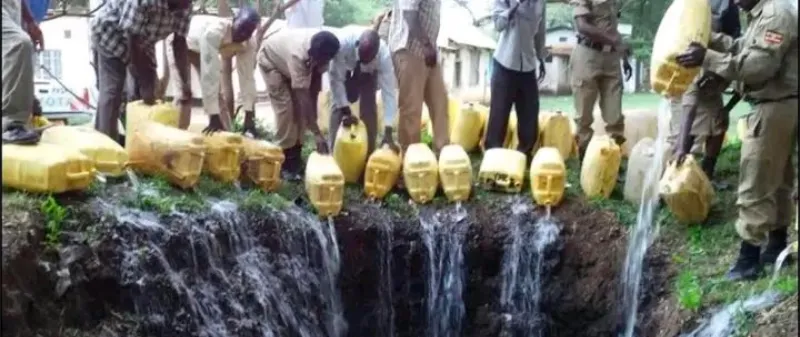
Despite the mounting concerns, police maintain that they remain committed to combating the illicit gin trade. Authorities say several trucks transporting jerrycans of waragi have been impounded, court orders obtained, and the seized alcohol destroyed.
However, dealers continue to adapt, using new routes and concealment methods to infiltrate rural communities. In trading centres such as Nanyidik, Kosiroi, Naput, and Nakiloro, illicit gin is reportedly sold openly, often disguised in water bottles to evade detection.
As enforcement efforts struggle to keep pace, community leaders warn that without sustained intervention, illicit gin will continue to fuel violence, poor health, and silent deaths across Karamoja’s grazing lands.
Email:homelandnewspaper@gmail.com


